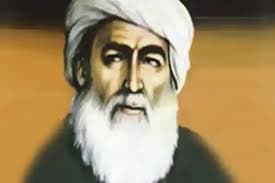
Biography
Abul Aʿla Mawdūdī was one of the most influential Muslim thinkers, writers, and political activists of the twentieth century. Born in 1903 in Aurangabad in what was then British India, he was raised in a family of scholars and individuals devoted to religious learning. His early education combined traditional Islamic studies with exposure to modern thought, shaping his later efforts to present Islam as a comprehensive system relevant to contemporary society.
Mawdūdī began his career as a journalist and soon became known for his powerful writing and intellectual analysis. Through newspapers and magazines he addressed the social and political challenges faced by Muslims under colonial rule and later in post-colonial societies. His writings emphasized the need for Muslims to return to Islam as a complete way of life governing both personal and societal affairs.
The defining feature of Mawdūdī’s thought was his understanding of Islam as an all-encompassing system. According to him, Islam regulates not only worship and ethics but also politics, economics, law, and social order. This idea is expressed clearly in his famous Qur’anic commentary **Tafhīm al-Qurʾān (Towards Understanding the Qur’an)**, a multi-volume work written in accessible Urdu to help modern Muslims understand the Qur’an in the context of contemporary life.
In 1941 he founded **Jamaat-e-Islami**, a religious and political movement aimed at establishing a society governed by Islamic principles. After the creation of Pakistan in 1947, he moved there and became an influential voice advocating the implementation of Islamic law in the new state. His political involvement brought him into conflict with governments, leading to imprisonment several times during his life.
Despite controversy, Mawdūdī’s writings spread widely across the Muslim world. His works were translated into many languages and influenced modern Islamic revivalist thought. Many scholars regard him as one of the major architects of twentieth-century Islamic political theory.
Mawdūdī spent his later years writing and guiding his movement. He passed away in 1979 in the United States while undergoing medical treatment and was buried in Lahore, Pakistan. His intellectual legacy continues to shape debates on Islam, politics, and modern society.
Methodology
Modern Islamic revivalist approach emphasizing Islam as a comprehensive system for personal life, society, and governance. His tafsir focuses on making the Qur’an understandable and relevant for modern readers.
Key Contributions
- Authored the influential Qur’anic commentary **Tafhīm al-Qurʾān**
- Developed the concept of Islam as a comprehensive political and social system
- Founded the **Jamaat-e-Islami** movement
- Influenced modern Islamic revivalist thought across the Muslim world
Quick Info
Lifespan
1903-1979 CE
Origin
India/Pakistan
School
Sunni (Revivalist)