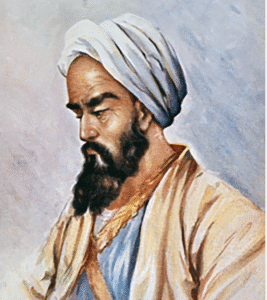
Biography
Fakhr al-Dīn al-Rāzī (1149–1210 CE), one of the towering intellectuals of the Islamic Golden Age, was a theologian, philosopher, jurist, and Qur’anic exegete whose influence extended across the Islamic world and beyond. He was born in Rayy, near present-day Tehran in Iran, during a period marked by vibrant scholarly activity and political turbulence...
Al-Rāzī grew to become renowned for his encyclopedic knowledge and intellectual versatility. His engagement with the Ashʿarī theological tradition shaped much of his intellectual career, and he became one of its most forceful exponents...
One of his most celebrated works is his monumental Qur’anic commentary **al-Tafsīr al-Kabīr**, also known as Mafātīḥ al-Ghayb (“The Keys to the Unseen”)...
Beyond tafsīr, al-Rāzī was an accomplished theologian. His writings reveal his mastery of kalām, legal theory, and philosophy, engaging deeply with the works of Aristotle and Avicenna...
His life unfolded against the backdrop of the Khwarazmian Empire. He settled in Herat toward the end of his life and continued teaching and writing until his death in 1210 CE. His legacy spans theology, philosophy, and multiple fields of knowledge.
Methodology
Philosophical and theological approach with extensive logical analysis, integration of reason and revelation, and encyclopedic treatment of interpretations.
Key Contributions
- Authored monumental 30+ volume Qur’anic commentary **al-Tafsīr al-Kabīr**
- Bridged rationalist and theological traditions in Islamic thought
- Developed Ashʿarī theology through philosophical engagement
- Contributed to multiple fields including medicine, astronomy, and physics
Quick Info
Lifespan
1149-1210 CE
Origin
Iran
School
Shafi'i (Ash'ari)