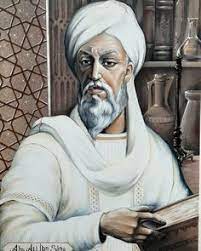
Biography
Abū al-Fidāʾ Ismāʿīl ibn ʿUmar ibn Kathīr al-Dimashqī, widely known as Ibn Kathīr, was one of the most prominent scholars of the fourteenth century. Born around 1300 CE (701 AH) near Busra in Syria, he grew up during the Mamluk period, an era marked by both political turbulence and vibrant scholarly activity. He later moved to Damascus, where he received his education and became closely associated with some of the most important scholars of the age, including Ibn Taymiyya and al-Dhahabī. Their influence shaped his intellectual outlook and scholarly methodology.
Ibn Kathīr quickly earned recognition for his knowledge of hadith, history, jurisprudence, and Qur’anic exegesis. In 1341 he was appointed to a scholarly commission tasked with examining matters of heresy, reflecting the trust placed in his judgment. A few years later he became a preacher (khaṭīb) at a mosque in Mizza near Damascus. His marriage into the family of the famous hadith scholar al-Mizzī further connected him with leading academic circles.
By 1366 he had been appointed as a professor at the Great Mosque of Damascus, one of the most prestigious scholarly positions in the region. In the later years of his life he lost his eyesight, which he attributed to the long hours spent studying and writing. Ibn Kathīr passed away in Damascus in 1373 CE (774 AH) and was buried near his teacher Ibn Taymiyya.
His most famous work is **Tafsīr al-Qurʾān al-ʿAẓīm**, commonly known as Tafsīr Ibn Kathīr. This commentary became one of the most widely read tafsīrs in the Islamic world due to its clear methodology and reliance on authentic narrations. In addition to his work in tafsīr, he also authored the historical encyclopedia **al-Bidāya wa-l-Nihāya**, which traces events from the creation of the world to eschatological predictions.
Ibn Kathīr’s legacy rests on his ability to combine rigorous hadith scholarship with Qur’anic interpretation. His works remain widely studied and continue to shape the understanding of traditional Sunni exegesis.
Methodology
Hadith-based methodology emphasizing authentic narrations and the explanations of the early Muslim generations. Ibn Kathīr prioritized interpreting the Qur’an through the Qur’an itself, through hadith, and through the sayings of the Companions and early scholars. He used isrāʾīliyyāt cautiously and rejected speculative theology in favor of a textualist approach.
Key Contributions
- Authored **Tafsīr al-Qurʾān al-ʿAẓīm**, one of the most widely studied tafsīrs in the Islamic world
- Integrated rigorous hadith scholarship into Qur’anic exegesis
- Promoted a textualist interpretive methodology rooted in the early Islamic tradition
- Authored **al-Bidāya wa-l-Nihāya**, an important historical chronicle of Islamic history
Quick Info
Lifespan
1300-1373 CE
Origin
Syria
School
Shafi'i (Athari)